
How to Choose the Right Watercolour Paper
Why does paper matter so much?
Many watercolour beginners focus on the paints and brushes but overlook the most important material of all — the paper. The right watercolour paper can change everything. It determines how colours spread, how well the paper holds water, and whether your painting turns out beautiful or warped and crinkled.
In this article, we'll cover everything you need to know to choose the right watercolour paper.
Three types of watercolour paper
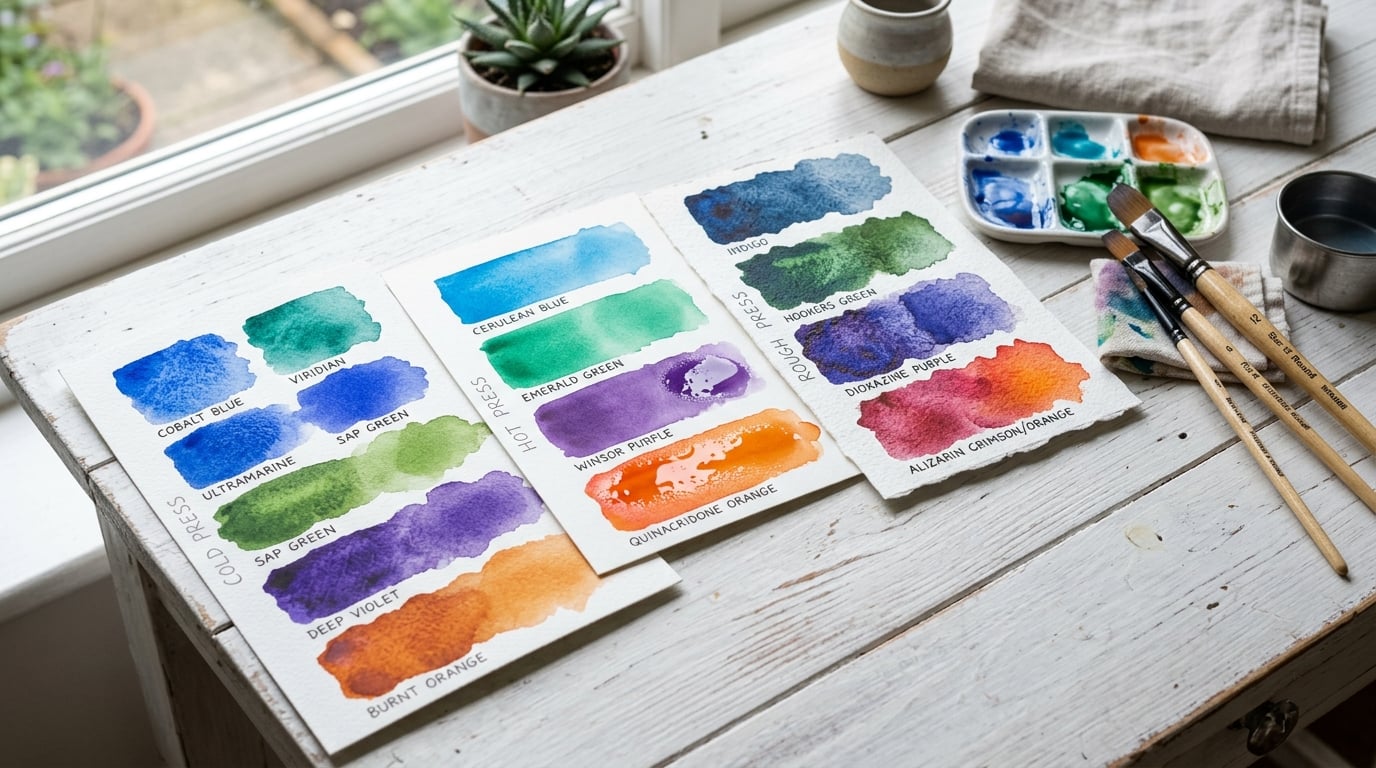
🧊 Cold Press (medium texture)
Cold press is the type most beginners and professionals reach for. The texture holds paint well and creates a lovely surface quality. It's great for landscapes, florals, and general watercolour work.
Best for: Beginners, landscapes, florals, and general watercolour paintings.
🔥 Hot Press (smooth surface)
Hot press paper is very smooth. It's excellent for detailed work, portraits, and mixed media combining drawing and watercolour. Paint flows more freely on it, so it takes a bit more experience to handle well.
Best for: Portraits, detailed work, and botanical illustration.
🪨 Rough (heavily textured surface)
Rough paper has a very pronounced texture. It's wonderful for creating dramatic effects, especially in landscapes and expressionist work.
Best for: Dramatic landscapes, dry brush techniques, and abstract work.
Paper weight — why does it matter?
Watercolour paper is measured in grams per square metre (g/m²):
- 185 g/m² — A lighter paper, suitable for practice and sketching. Can buckle if a lot of water is used.
- 300 g/m² — The standard. Works well for most paintings without needing to stretch the paper first.
- 640 g/m² — Thick and sturdy, almost like board. Excellent for large pieces where a lot of water is used.
We recommend 300 g/m² as a starting point — it's comfortable to work with and won't warp on you.
Cotton vs cellulose — what's the difference?
Cotton paper (100% cotton): This is the premium option and gives the most beautiful results. It absorbs water evenly and allows you to work wet areas for longer. Brands like Baohong are well known for their top-quality cotton paper.
Cellulose paper: A more affordable option that's great for practice. It doesn't hold water quite as well, but it's perfect for learning the fundamentals.
Our watercolour paper recommendations
At Föndurlist, we're proud to stock a range of watercolour papers from the world's best manufacturers:
- Baohong — 100% cotton with outstanding value for money. Suitable for both beginners and experienced artists.
- Canson — A French tradition, with a wide range from cellulose to cotton.
Browse our full watercolour paper selection here.
Tips for beginners
- Start with 300 g/m² cold press — it's the most versatile paper you can get.
- Try a few different brands — everyone responds differently to paper, so find your favourite.
- Buy a block rather than loose sheets — a block stays flatter and is much easier to work with.
- Don't skimp on paper — better paper means a better experience and better results.
Ready to start your watercolour journey? Browse our watercolours, watercolour brushes, and everything else you need on our watercolour supplies page.
Also check out our article: How to get started with watercolours — a complete beginner's guide.