
Calligraphy for Beginners — Pens, Ink, and Your First Steps
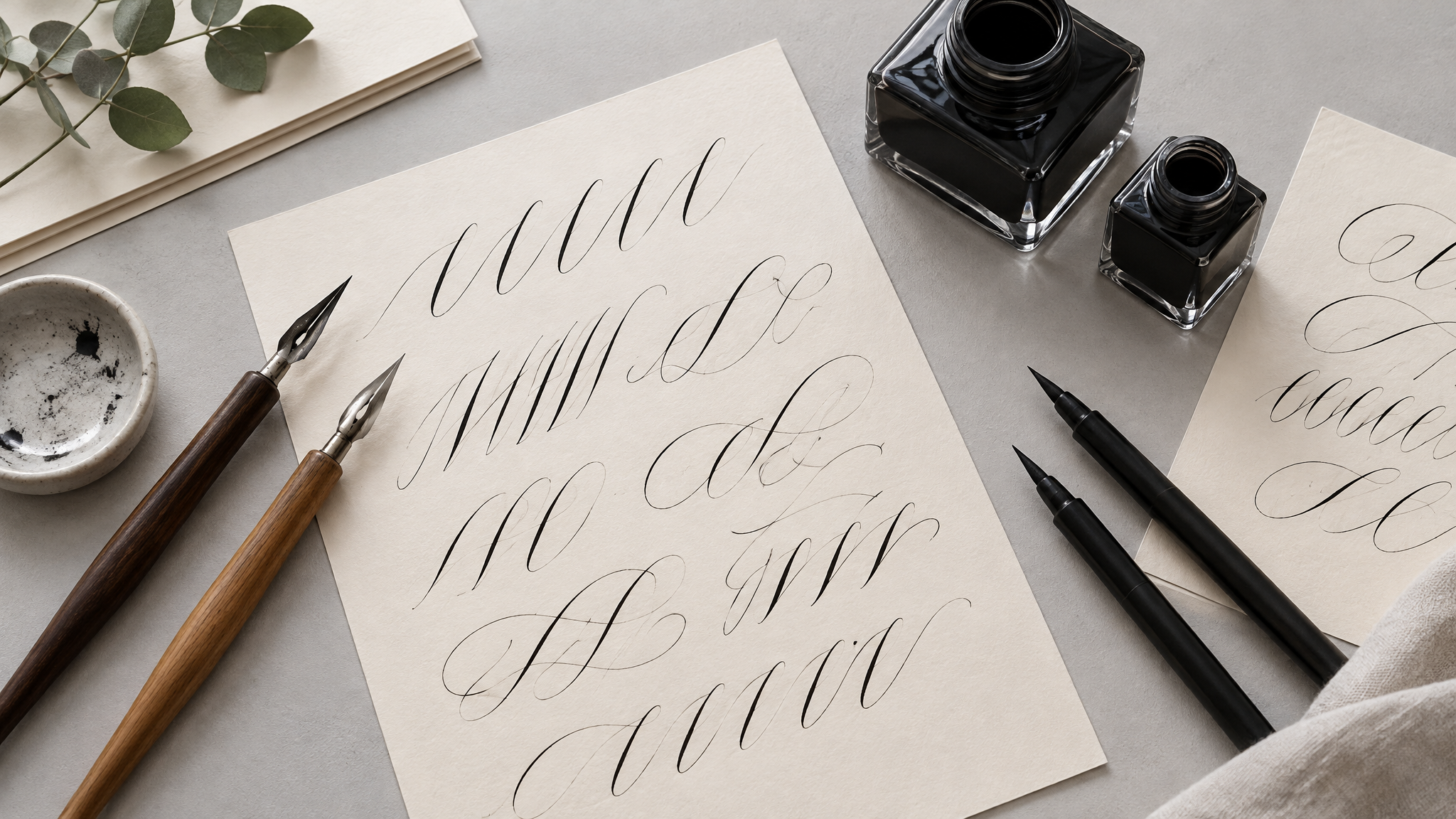
Calligraphy is the art of beautiful writing — whether you want to make cards, invitations, envelopes, or simply unwind with a creative hobby. The best part is that you need surprisingly little to get started. In this guide we'll go over which tools suit beginners, the differences between brushes and pens, and how to take your first steps.
Beginner Sets — The Easiest Way to Get Started
If you're taking your very first steps, we strongly recommend a ready-made set. You'll get pens, nibs, and often practice sheets all in one package, so you don't have to worry about what works together:
- Manuscript Italic Calligraphy Set — a classic beginner set with interchangeable nibs (1,990 kr.)
- Mont Marte Calligraphy Pen Set – 31 pcs — a generous set with multiple nibs and ink (4,900 kr.)
- AMI Calligraphy Set 9 pcs — a great selection of nibs presented in a quality case (7,900 kr.)
Types of Pens — What's the Difference?
Brush Pens
Brush pens have a flexible tip that produces thick and thin lines depending on pressure — perfect for modern brush lettering. They're convenient, require no separate ink, and are great for beginners:
- Sakura Pigma Brush Pen – Set of 3 — waterproof and lightfast
- Zig Writer Pure Black and Zig Memory Writer Black Metallic — versatile marker pens with dual tips
Fineliners and Marker Pens
Fineliners are well suited for delicate lettering, outlines, and faux calligraphy, where you manually thicken the downstrokes by hand. The Uni Pin Fineliner Set (3 pcs) and the dual-tip calligraphy marker are both great starting points.
Dip Pens and Ink
The classic approach: pen holders with interchangeable metal nibs that you dip into ink. This gives you the most beautiful and varied line variation, but requires a little more practice. You'll need a good ink to go with it — for example, Sumi Golden Black Ink (180 ml) or Sumi Silver Black Ink, both of which flow smoothly and dry to a rich, deep finish.
Top Tips for Beginners
- Start with basic strokes: Practice upstrokes and downstrokes repeatedly before moving on to letters — it trains your hand to find the rhythm.
- Light pressure up, heavy pressure down: The golden rule of calligraphy is thin upstrokes and thick downstrokes.
- Use smooth paper: A good, smooth sheet prevents the nib from catching or the ink from bleeding.
- Be patient: Calligraphy is all about repetition — beautiful letterforms come with practice.
Browse the Full Range
We stock pens, ink, nibs, and sets for calligraphy at every level. Explore the full calligraphy range at Föndurlist and find what works for you. Want to learn more about colours and crafts? Check out our crafts for everyone post.