
Watercolour Techniques — Everything You Can Do with Watercolours
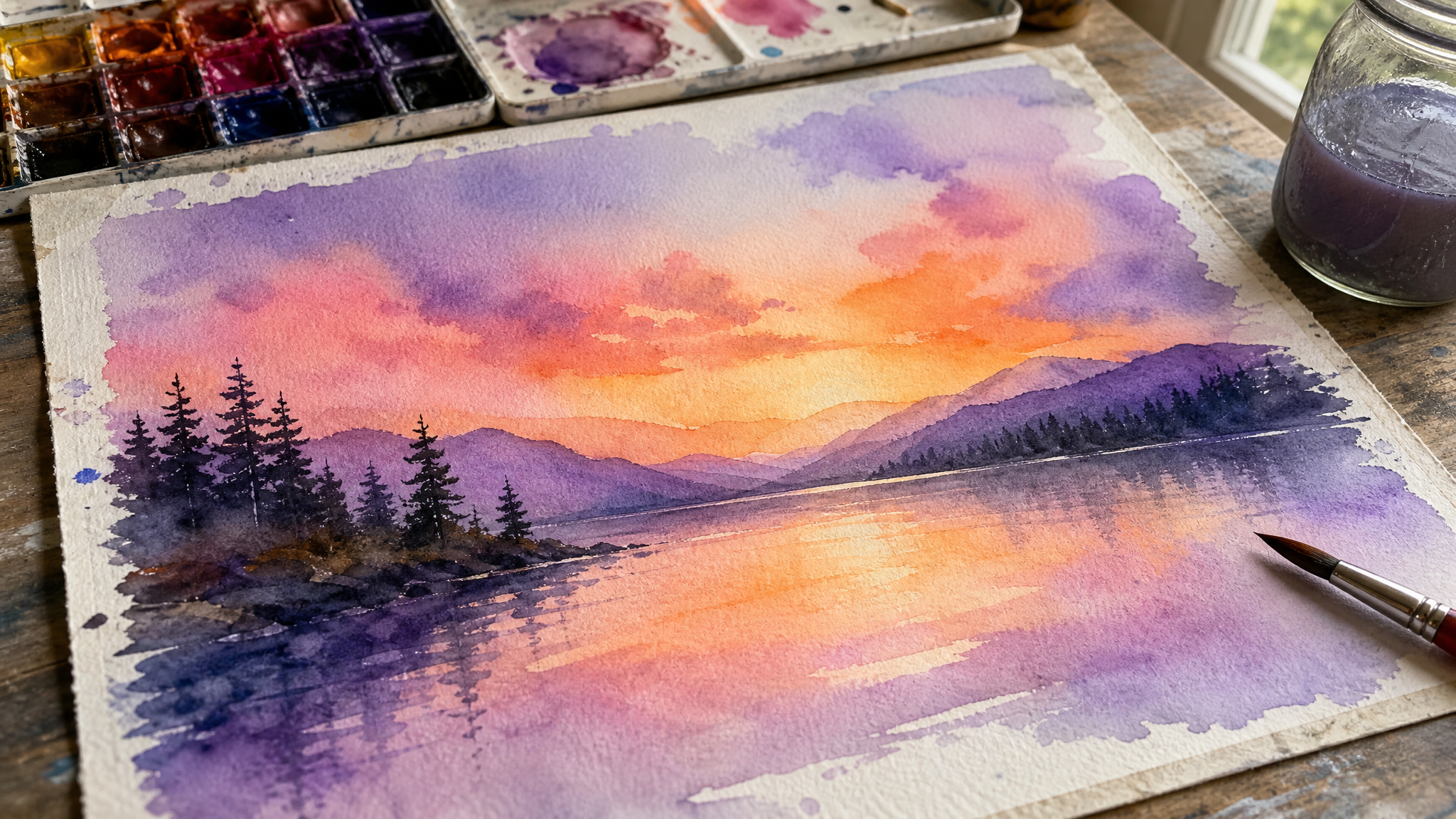
Watercolour — The Most Versatile Medium
Watercolour is one of the most versatile and beloved mediums in art. From soft, dreamy landscapes to precise botanical illustrations — watercolour offers boundless creative possibilities.
Here we introduce the key techniques that open the door to this wonderful world.
Fundamental Techniques
💧 Wet-on-Wet
Apply wet paint onto a wet surface. The colours flow together and create soft, organic edges. This technique is ideal for:
- Skies and clouds
- Water surfaces and reflections
- Soft backgrounds
- Abstract work
Tip: Control the moisture level of your paper — too wet and the colours become too diluted, too dry and you lose that beautiful soft flow.
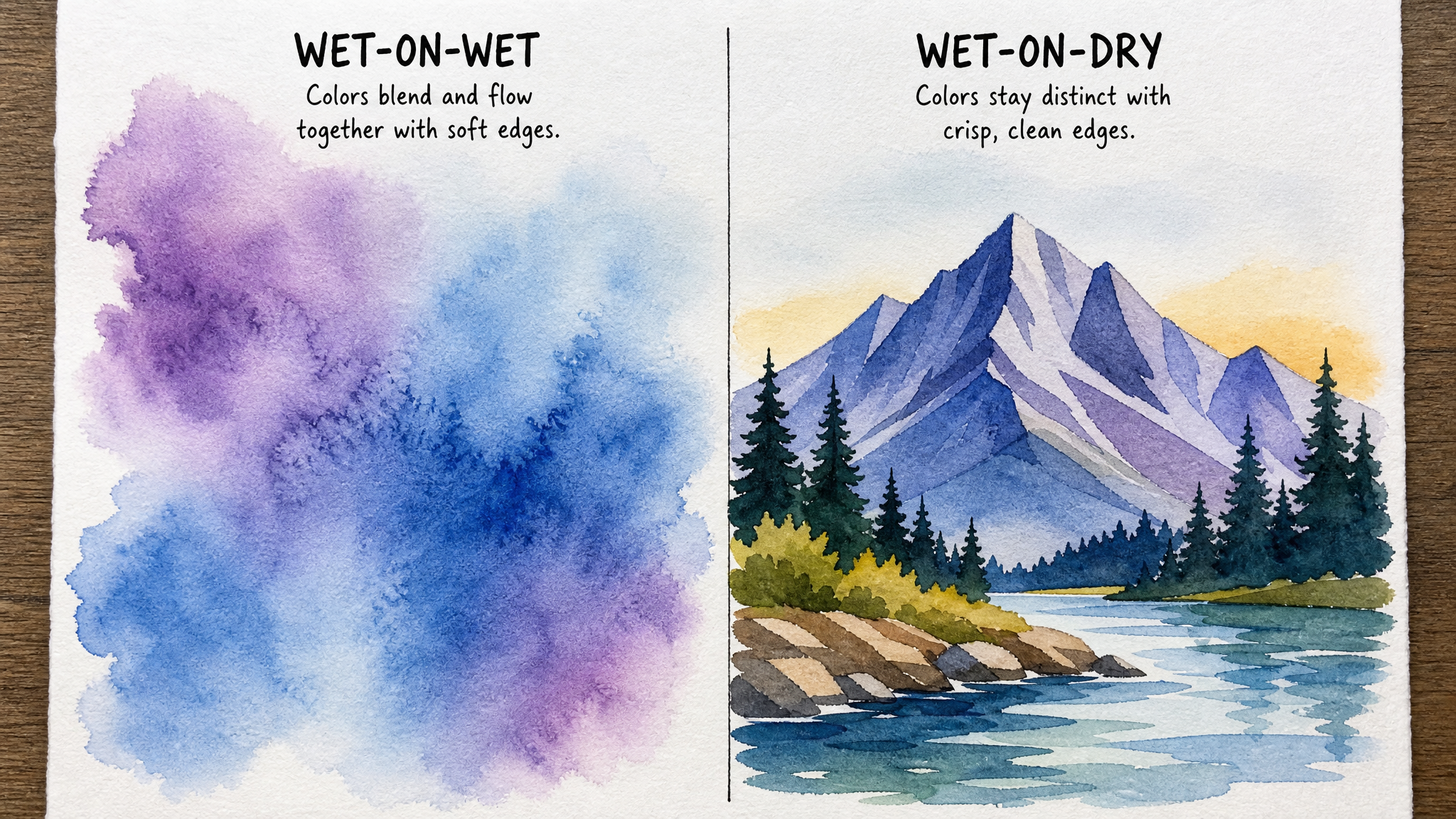
✏️ Wet-on-Dry
Apply wet paint onto a dry surface. This gives crisp edges and precise lines. Well suited for:
- Detail work and texture
- Buildings and architecture
- Foliage and flowers
- Faces and portraits
Advanced Techniques
🔍 Glazing
Apply thin, transparent layers one on top of another, allowing each to dry fully before adding the next. Each layer adds depth and richness. This is the key to realistic watercolour painting.
🧹 Lifting
Use a clean, damp brush to lift colour from a dried surface. This creates highlights, clouds, and luminous effects. Some colours (e.g. staining pigments) are harder to lift than others.
🧂 Salt Technique
Sprinkle coarse salt onto a still-damp painting. The salt crystals draw the pigment towards them and create beautiful crystalline patterns. This is great for suggesting:
- Snowflakes
- Stars
- Leaf texture
- Water surfaces
🖌️ Dry Brush
Use a semi-dry brush on a dry surface. The texture of the paper shows through, creating a rough, textured stroke. Perfect for:
- Grass and tree bark
- Ocean waves and surf
- Aged wood and stone
🎭 Masking
Use masking fluid (liquid frisket) to protect white areas before you paint. Once dry, you can rub off the masking fluid to reveal clean, bright white underneath.
Particularly well suited for:
- Highlights on water
- White flower petals
- Snow-capped peaks
Specialty Techniques
💦 Splatter
Flick paint from your brush onto the painting to create a spray effect — great for snow, stars, or texture.
🔥 Cauliflower / Bloom
Drop water onto a partially dried layer — the water pushes the pigment outward and creates a distinctive blooming, cauliflower-like pattern.
📐 Negative Painting
Paint around a shape rather than the shape itself — this creates depth and a sense of layering.
🧊 Plastic Wrap
Press cling film onto a wet layer — when removed, it leaves behind a richly textured, crystalline pattern.
Which Watercolours Do We Stock?
At Föndurlist we carry quality watercolours from the leading manufacturers:
- White Nights — professional Russian watercolours at an affordable price
- Roman Szmal Aquarius — handcrafted Polish watercolours
- Daniel Smith — world-renowned watercolours
- Holbein — Japanese watercolours (available by special order)
- Sakura Koi — popular travel sets
🛒 Shop Watercolours at Föndurlist 📚 More Articles
Föndurlist is committed to education and quality. We're here to help you find the right materials and tools to achieve your creative goals.